
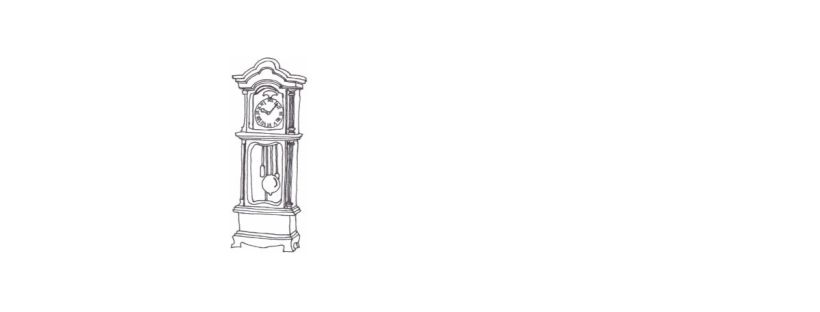
It mocks my every breath.
Tick. Tock.
“You haven’t written that book,” it says.
Tick. Tock.
“What about that album you wanted to record?” It questions. “Or that fly-in fishing trip you wanted to take?”
Tick. Tock.
“You don’t see your sister and nieces often enough. You don’t spend enough time with your dad. When did you last see your cousins, aunts, and uncles?”
Tick. Tock.
“Time is running out,” it threatens. “Some goals may already be out of reach, some dreams forgotten, some relationships beyond repair.”
Tick. Tock.
Death’s witness
My partner’s father passed away recently. It was unexpected.
I was in the room when they took him off life support. A witness to Death.
The experience was…unsettling.
“This doesn’t seem real,” my partner and her stepmom said.
For me, it was all too palpable. All that sorrow, all those words left unsaid, all the regrets. It was all so loud, a clock ticking in a silent room.
Life’s fragility is like that sometimes—ringing in your ear and impossible to ignore.
Like when I lost two close friends. And when cancer took my mom.
My friends were in their 20s. They were in the prime of their lives with bright futures ahead of them.
My mom was in her mid-50s. She wasn’t particularly unhealthy. She even avoided candy made with blue food colouring because she read it caused cancer.
Is that what they call irony?
Does it matter?
I’ve come to terms with the loss. Life moves on—fair or not, whether I want it to or not.
But after this most recent exposure to death, and as I’m now in my 40s, I’m wondering what fate has in store.
- Will my heart fail, am I destined to fight cancer?
- Will I be the victim of a tragic accident?
- How much time do I have left?
I don’t know.
Nobody does. Which is exactly the point of this: how much time we get is the complete unknown.
There’s always time to die
You could live until you’re old and grey. Or this could be your last day.
This isn’t fatalistic. It’s realistic. And it’s not meant to be terrifying. It’s meant to be inspiring.
Because we’re all so busy, right?
We’ll get to it later—whatever it is.
But the clock ticks at its own pace. It waits for no one, always moving forward.
That’s why Stoics often contemplate death. Memento mori, they say. You must die.
This is a reminder to enjoy the time you have, to be in the moment and take nothing for granted.
Memento vivere, they also say. You must live.
Death contemplation is central to Buddhists, as well.
To them, the act is transformative. They believe contemplating death makes you feel alive, offering liberating insight into your mortality.
For most of us, we see dying as a future event. Another one of those things “we’ll get to later.”
Well, both Stoicism and Buddhism speak of death as a constant, present experience.
To put it bluntly, you’re dying right now. Each passing second and every breath brings you closer to your expiration date.
Not the most pleasant statement, sure. But it gives you a little perspective, to know you’re dying.
That kind of knowledge forces you to think about the time you have left. It forces you to consider the here and now.
Would you be content having your life end as it is?
Have you done the things you want to do, seen the things you want to see? Are your affairs in order, are you fulfilled, are you free from regret?
I know what my answer is. I don’t want to waste another second—I want to enjoy the ride while I can.
Because there’s never enough time to live, but there’s always time to die.
Tick. Tock.
 The Davis Daily
I enjoyed this very much. It is inspiring. A reminder about the fleeting reality that comes and goes with each breath.
LikeLiked by 1 person
Thank you for reading. Happy to hear it resonated.
LikeLiked by 1 person