
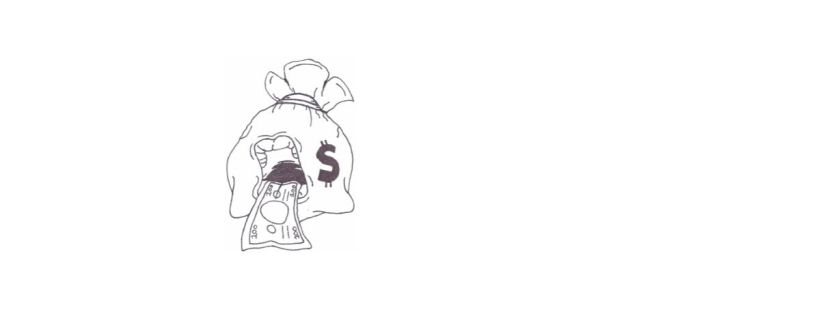
I’ve wasted a lot of time and money for a good time. Lived without worry until I had to.
Well, I’m worrying now.
Because it feels like it’s too late to make up lost ground.
Will I ever not stress over money? Will I ever have enough to always live comfortably? Will I ever be able to afford to retire? (Is that even still a thing?)
Guess I’ll work forever. As my old man says, “You can sleep when you’re dead.”
Here’s the thing: for most of my life, I took short-term gain over sacrifice. I often chose pleasure in the moment instead of delayed gratification. Spent money rather than saved or invested it.
There was no thought of long-term consequences. And that’s led to an uncertain future.
You see, every decision you make has a price. By saying yes to one thing, you’re saying no to another. There’s always a trade-off.
Blowing off a responsibility means burning a bridge. Spending recklessly means a poor relationship with cash—or, possibly, not having enough to retire.
Until my 30s, I never considered the opportunity costs of my choices. The doors I closed, the locks I turned, the keys I threw away.
I try not to live with regrets. What’s done is done. But I wish I’d been smarter financially when I was younger.
Now, I’m paying the price with stress and fear.
There are things I’d love to do. Travel, buy guitars, spoil my partner.
But I can’t—not responsibly, anyway—unless a large lump sum magically appears in my bank account. Or I work twenty-four-seven, three-sixty-five.
Yes, it’s one thing to be happy with what you have. And I have a lot, let’s be honest. Still, it’s another thing to be able to settle down when you’re past your prime.
That said, it’s not all doom and gloom.
I’m a lot smarter with my money than ever before. My savings are growing and I no longer live paycheque to paycheque.
More to the point, I’m aware of life’s opportunity costs and carefully consider the trade-offs of my decisions.
If you aren’t already, I suggest you do the same.
- Start small, even if it feels too late. A little effort today beats regret tomorrow.
- Think long-term. Sacrifices now can prevent suffering later.
- Stop comparing. Everyone walks their own path.
Guess that’s what this post is all about—the choices we make, the prices we pay, and taking charge of your future.
After all, this is life: under construction.

 The Davis Daily
9 thoughts on “Paying the price: opportunity costs and trade-offs”