
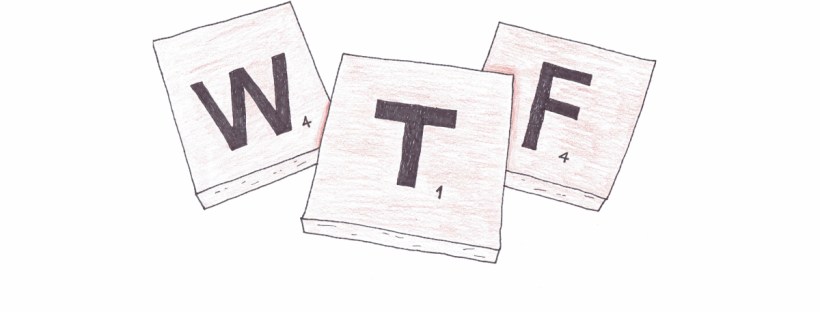
My mom loved Scrabble. She and I often played at the cottage.
Like most people, my goal was to lay down the longest words. To use all my tiles in one shot. Or congest the board. To prevent my opponent from playing their own long, high-scoring words.
But that strategy didn’t work against my mom.
Thanks to the official Scrabble dictionary, she knew most of the accepted two- and three-letter words. Like za and zu and qi. Or aji and adz and wtf! (Okay, maybe not that last one.)
She was ruthless with these sneaky little words.
I’d play a six-tile word worth 30 points. She’d place two tiles that connected and formed multiple words worth 50+ points. And the more crowded the board, the more she piggybacked to stack her points.
Against this strategy, it didn’t matter if I played the longest word or the last word. She ALWAYS ended up with the higher score.
“Well-being is realized by small steps, but is truly no small thing.”
Zeno of Citium
I don’t play Scrabble much these days. But I haven’t forgotten how my mom rigged the game. Because the lesson goes beyond the board.
Bigger isn’t always better.
Light bulb breakthroughs and giant leaps forward are far less common than we’re led to believe. Growth and achieving your goals are a result of incremental progress.
Small steps. That’s the best way forward—whether in your career, your passion project, or your lifestyle.
Instead of aiming for major milestones, pinpoint little opportunities with the power to compound.
Keep building. Tile by tile.
(Well played, Mom.)
 The Davis Daily
3 thoughts on “Scrabble: how my mom “rigged” the game (and why you should, too)”